laminate flooring reviews: If Trees Could Talk: If Trees Could Talk One of the best ways to learn about a tree is to look at its annual rings – the science of dendrochronology. Tree r...
Friday, January 23, 2015

Sunday, May 25, 2014
If Trees Could Talk
If Trees Could Talk
One of the best ways to learn about a tree is to look at its annual rings – the science of dendrochronology. Tree rings show patterns of change in the tree’s life as well as changes in the area where it grows. I shared with the class a cross-section of a Ponderosa Pine and a Western Hemlock. We compared the bark and the growth rings of each and discussed how these rings could be used to tell stories of the trees past (fire or insect damage, years of drought or slow growth compared to years of abundant rain).
 I then read aloud the following story about a tree and asked them the questions listed below to check for their understanding.
What do you think the tree cookie from this tree looked like? Draw a picture of what you think the rings might appear.
Thursday, April 17, 2014
Types of wood and disadvantages

Types of wood and disadvantages
1 - types of natural wood :
Timber is divided by a natural climatic zones to:
A - Woods soft dark color such as coniferous trees , including wood Sweden and grow in cold regions .
B - Woods medium hardness dark color , such as beech and oak wood and mahogany ... and grow in cold regions .
C - precious hardwoods such as oak and walnut , ebony and grow in the tropics . Prior to use, the use of any type of wood should be dried to reduce the percentage of water in it,
The types of drying :
1 - Altgfik steam and boiling water .
2 - drying ovens with natural air ducts .
3 - kiln drying with compressed air.
It consists of natural wood ( a section of the tree ) of the following :
Cortex , cambium , wood back, wood heart , the core , the annual rings , and the age of the tree is measured by the number of annual rings .
Defects timber :
Defects arise in the timber as a result of various factors, weather , and most important of these flaws :
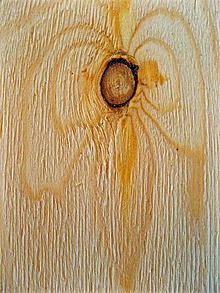
1 - Contract: abound in softwood lumber such as wood white , and the node is a place contact the branch torso is notified that they may be separated during the work must therefore be removed machine that removed the contract, and they can be burned Beremus Incineration ( Babur ) .
2 - torsion : bends the branches as a result of the intensity of the movement of wind when the tree is small .
3 - rot : It is produced from the decomposition of materials Synovial in the tree.
4 - trauma : the faults appear in the cross section of the tree because of the drop at the cut trees and colliding heavily to the ground.
5 - aging : where it becomes the heart of the tree Ojoava and damage the wood part of the tree because of the delay in cutting the tree for a good time .
2 - Types of industrial timber :
A - sheets of plywood ( plywood ) : a layers the direction of the veins in the first layer perpendicular to the direction of the veins in the second layer , and plastered layers on top of each other with the pressure to ensure that no swollen when exposed to water , and not splitting panels when hammering nails in layers. And using a single number of layers least 3 layers , and each layer is called Ffinerh .
A picture of a wood and opposite note of its constituent layers
B - shingles latte :
Frequently used panels latte in the Household Furniture and Aalmketbi has many other uses .
The plates are divided into several types latte are:
1 - shingles latte in mass composed of strips of wood width not exceeding 25 mm and not less than 8 mm gathered and attached to a face -to-face and covered with sheets of double-sided natural wood .
2 - sheets of laminate latte : no more than a slide show for the 7 cm gathered and attached to a face -to-face to be a flat surface covered with sheets of double-sided natural wood .
3 - wood particleboard panels : in the form of sheets made from a combination of grained wood adhesives with pressing and pressing .
4 - fibreboard : made from a mixture of wood fibers and adhesives using heat and pressure .
5 - shingles plastics and melamine panels .
Monday, April 14, 2014
4 steps to take care of wooden furnishings
.jpg)
The wood material months and the most popular in the furniture industry , and is hardly devoid of any house
of wood furnishings , to the elegant appearance and ease of handling .
But the wood can be exposed to many of the factors that You damage , so it is necessary to take some necessary actions , especially when cleaning upholstery, these tips will help a group to handle , according to the Times of India :
1 - protect the wood from water and Alasarowalsoaúl and other remnants of foods and cosmetics , where that can be absorbed by the wood and leaves stains deformation appearance , plus they cause putrefaction with time.
2 - maintaining a clean wooden surfaces of the furniture from dust and dirt by using a vacuum cleaner for this purpose, or a piece of dry cloth cleaned out regularly , and for wood coated lacquer used teak oil for cleaning , and the surfaces of heavily soiled wet the cloth with warm water with cleaning fluid suitable and wipes by soiled areas and then dried immediately .
3 - can remove dirt , sticky spots such as tea, coffee, using a cloth wet in a simple rub Btalv then dried with a dry cloth , preferably experimentation on the part of the furniture hidden in the beginning.
4 - must paint the wood with wax or paint annually to maintain its luster , and helps to protect it from moisture and weather factors , and to prevent the accumulation of wax can be used to piece cloth dampened with mineral oil , and must protect the hands and eyes during coating, and can be used specialists to get the best results , especially in the details small .
Monday, February 10, 2014
Hard and soft woods
Hard and soft woods
There is a strong relationship between the properties of wood and the properties of the particular tree that yielded it. The density of wood varies with species. The density of a wood correlates with its strength (mechanical properties). For example, mahogany is a medium-dense hardwood that is excellent for fine furniture crafting, whereas balsa is light, making it useful for model building. One of the densest woods is black ironwood.
It is common to classify wood as either softwood or hardwood. The wood from conifers (e.g. pine) is called softwood, and the wood from dicotyledons(usually broad-leaved trees, e.g. oak) is called hardwood. These names are a bit misleading, as hardwoods are not necessarily hard, and softwoods are not necessarily soft. The well-known balsa (a hardwood) is actually softer than any commercial softwood. Conversely, some softwoods (e.g. yew) are harder than many hardwoods.
Color
Color
In species which show a distinct difference between heartwood and sapwood the natural color of heartwood is usually darker than that of the sapwood, and very frequently the contrast is conspicuous (see section of yew log above). This is produced by deposits in the heartwood of chemical substances, so that a dramatic color difference does not mean a dramatic difference in the mechanical properties of heartwood and sapwood, although there may be a dramatic chemical difference.
Some experiments on very resinous Longleaf Pine specimens indicate an increase in strength, due to the resin which increases the strength when dry. Such resin-saturated heartwood is called "fat lighter". Structures built of fat lighter are almost impervious to rot and termites; however they are very flammable. Stumps of old longleaf pines are often dug, split into small pieces and sold as kindling for fires. Stumps thus dug may actually remain a century or more since being cut. Spruce impregnated with crude resin and dried is also greatly increased in strength thereby.
Since the latewood of a growth ring is usually darker in color than the earlywood, this fact may be used in judging the density, and therefore the hardness and strength of the material. This is particularly the case with coniferous woods. In ring-porous woods the vessels of the early wood not infrequently appear on a finished surface as darker than the denser latewood, though on cross sections of heartwood the reverse is commonly true. Except in the manner just stated the color of wood is no indication of strength.
Abnormal discoloration of wood often denotes a diseased condition, indicating unsoundness. The black check in western hemlock is the result of insect attacks. The reddish-brown streaks so common in hickory and certain other woods are mostly the result of injury by birds. The discoloration is merely an indication of an injury, and in all probability does not of itself affect the properties of the wood. Certain rot-producing fungi impart to wood characteristic colors which thus become symptomatic of weakness; however an attractive effect known as spalting produced by this process is often considered a desirable characteristic. Ordinary sap-staining is due to fungal growth, but does not necessarily produce a weakening effect.
Friday, October 18, 2013
Health insurance shock shoppers sticker suffer
Health insurance shock shoppers sticker suffer
"It's a horribly complex and ill-designed system that's going to be good for some people -
mostly people with lower incomes - but for a lot of people, it's not going to be good for them,"
said Jeff Francisco
health insurance agent who supports universal coverage but believes the
law doesn't go far enough to help consumers and curb costs."Every plan is going to cost more than what I pay now. And what I pay now is
ridiculous," said Ross, 47, who owns a cat-sitting business called y and
pays more than $400 a month for her insurance. "It's a great thing for
some people, but it's certainly not helping me."
the Affordable Care Act because she was hoping to get a better deal.
Ross is among the millions of Americage on their own, but must find new
coverage because the health law has rendered their current policies
outdated. But Ross, like many others, is not finding the plans sold
through the Affordable Care Act to be particularly affordable.
Aside from a prohibition on denying coverage to people with pre-existing
medical conditions beginning Jan. 1, the health law also rlicies sold
next year to cover a minimum number of benefits. And that can add to the
cemiums.
These include such mandamaternity and newborn care, substance abuse treatment, and dental
But
now that she's seen her options, Ross is disappointed. Turns out she
earns slightly too much money to qualify for federal financial aid to
help her buy coverage in the state's exchange, called Covered
California. And because policies have to be upgraded to comply with the
new law, her rates are going up nearly 10 percent.
Subscribe to:
Posts (Atom)